Innovation Journey

Duration

5 Months

Number of Participants

20

Type

DISCOVERY flex

Impact

How we empowered a Siemens software diagnosis team to co-create with customers and transform real-world challenges into market-ready solutions.

The Overview

From market pressure to innovation pipeline
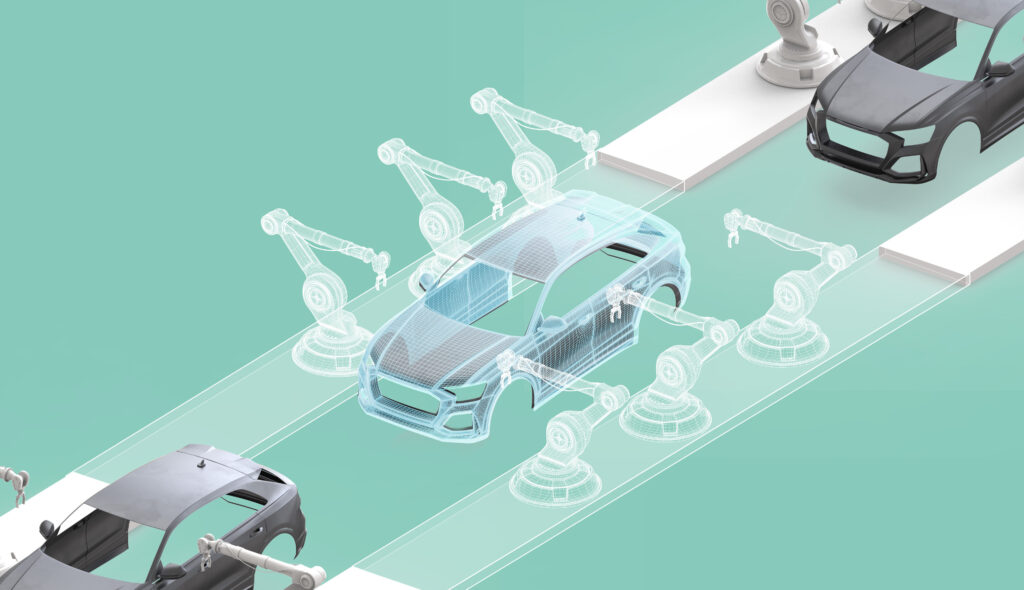
The automotive industry is shifting fast, and software diagnosis systems are feeling the pressure. As vehicles become increasingly capable of testing themselves within the production line, the established business model faces a genuine strategic question: adapt or become irrelevant. Over five months, a team of 20 engineers and specialists worked with the Siemens Creativity Lab through a Discovery Flex engagement to do something harder than reacting to change: they learned to shape it. The result is a validated set of innovation directions, built with real customer input from the US, Germany, Japan, and China, and grounded in a new way of thinking about what the business can become.

The Story

How we met.

The conversation that started this project was about staying relevant. The software diagnosis team could see the automotive landscape shifting beneath them. Vehicles were beginning to test themselves. The Chinese market was accelerating in directions that European players had not fully anticipated. The question on the table was how to respond in a way that would actually lead somewhere useful. The Creativity Lab was brought in to build the capacity to find real answers, together with the customers who live the challenges every day.

The Problem

A strong business facing a fast-moving market
Software diagnosis systems have long been a reliable and technically sophisticated part of the automotive production process. Reliability built on a stable market, however, is a different thing from resilience in a market that is actively restructuring itself. The rise of software-defined vehicles, the speed of Chinese automotive players, and the growing capability of vehicles to run their own diagnostics were arriving fast. The team needed a structured way to get closer to real customer problems, generate ideas that responded to them directly, and validate those ideas before committing resources.

Creativity Lab – Breakthrough Consulting

Take a look at our breakthrough consulting and discover the individual journey to our clients’ transformation.

Project

Initiation

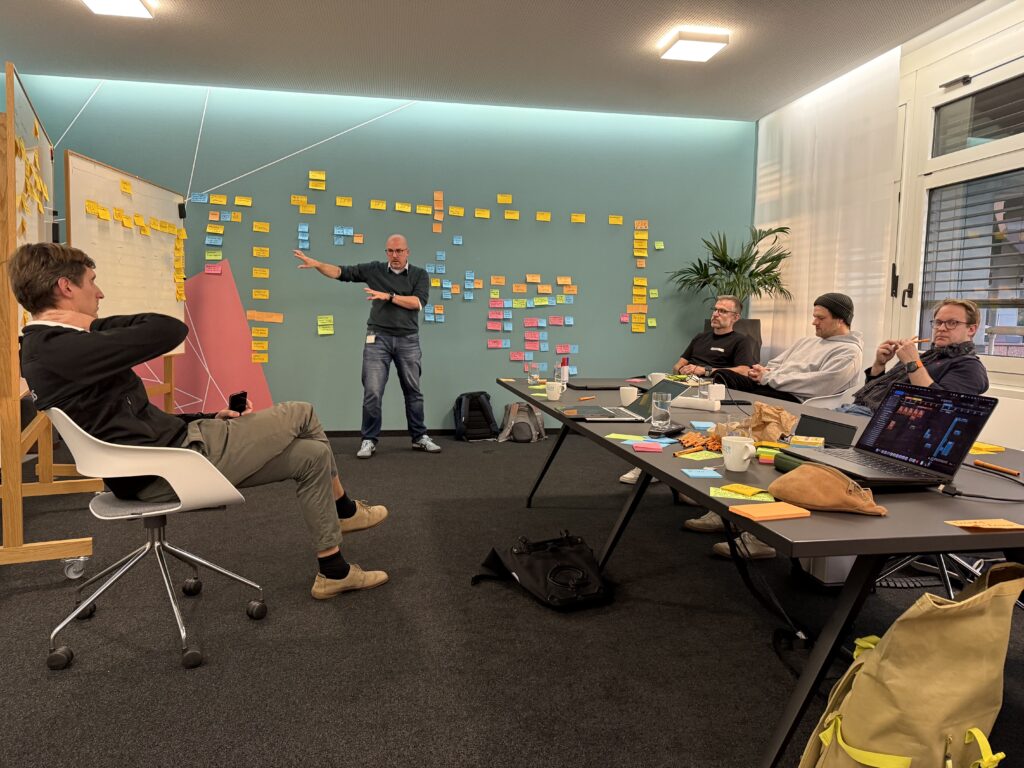
The project began with a core team of five people and a clear mandate: do not just analyze the market, find where the business can actively create value within it. Using a strategic map, the team identified both the forces putting pressure on the existing model and the spaces where innovation was genuinely possible. Four focus areas emerged: the shift toward software-defined vehicles, the dynamics of the Chinese market, the potential of minimum viable product approaches, and the broader question of business diversification. These four themes became the compass for everything that followed, keeping the work anchored to real market forces rather than internal assumptions.

Problem Space

Exploration

The Exploration phase was designed to break the team out of familiar thinking. Inspiration sessions brought in colleagues from other departments and perspectives from industries outside automotive, deliberately widening the lens. At the same time, teams worked through real customer and end user pain points connected to each of the four focus areas. Interviews with both existing and potential customers provided something no internal analysis could: honest, outside-in feedback. These conversations challenged assumptions, surfaced problems the team had not fully seen, and gave the work a grounding in actual market reality. One team even secured a former customer as an interview partner, an outcome that opened perspectives no internal session could have replicated.

Solution

Creation

With genuine user insight in hand, the Creation phase opened up the solution space. Methods like Crazy 8s and perspective-shifting exercises pushed teams to generate a wide range of concepts before narrowing down. Working with detailed personas, including the feelings, frustrations, and stress points of real users, produced ideas that pure data analysis would never have surfaced. An internal pitch competition made the quality of ideas visible quickly and honestly. It became clear that a strong concept needs more than a good instinct. It needs user logic, a clear value proposition, and enough detail to survive contact with a real customer. That contact came sooner than most teams expect.

Breakthrough

Execution

The most significant moment came when the team took their early-stage concepts directly to customers in Japan and China. They presented ideas openly, invited criticism, and built on feedback in real time. What came back was a clearer picture of what the market actually needs, shaped by the people who live inside it every day.
One participant put it plainly: “It was a rollercoaster. From feeling like we had all the answers to realizing how far ahead some players already are. But you can come out of even the difficult moments stronger. The way the Creativity Lab moderated those sessions was worth its weight in gold.”
Back home, the team translated customer feedback into prototypes, testing each concept against technical feasibility, business viability, and genuine user desirability.

Outcome

Over five months, 20 engineers and specialists moved from a defensive posture to an active innovation stance. The team built a pipeline of validated product directions, shaped directly by co-creation with customers across four of the most strategically important automotive markets in the world. They developed new habits of thinking: staying in the problem longer, building with real user depth rather than assumed feature lists, and using language that opens possibilities rather than closes them. The “What if” question, as one participant put it, made everything possible. No idea was dismissed before it had a chance to breathe. The project produced a team that knows how to keep generating them, and the customer relationships to keep testing them against reality.

Let’s Start!

You thought becoming more creative was that easy? Too good to be true!

Investing in creativity to solve your challenges takes time. We work with science-based approaches to create environments that foster the creativity of you, your team, and the entire organization. What’s your creative challenge?